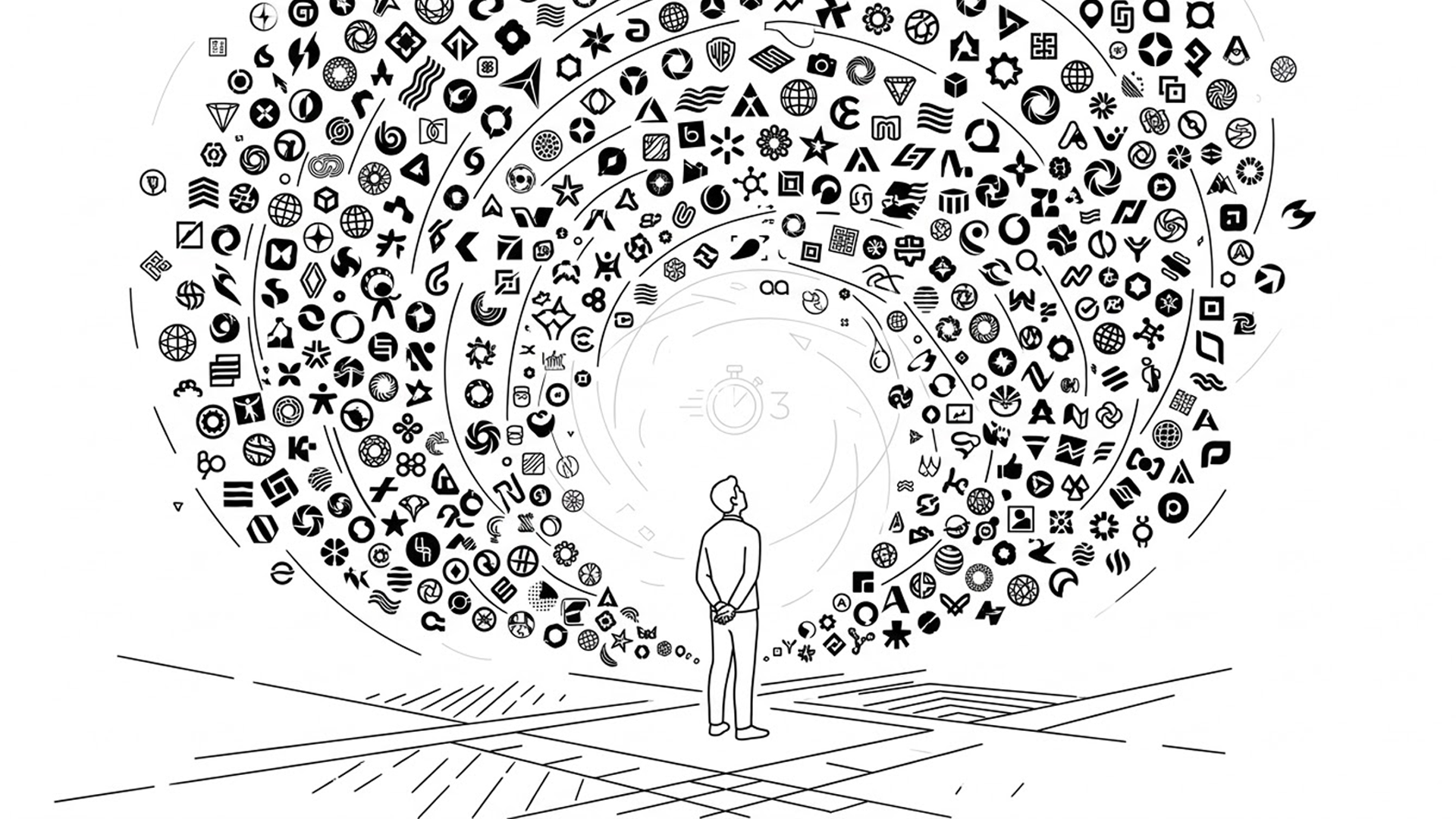
Imagine you are standing in the middle of Times Square in New York, on Sheikh Zayed Road in Dubai, or in any square in any Arab or Western capital. The lights are blazing, giant screens are shouting adverts at you, and hundreds of people stream past carrying shopping bags and wearing clothes stamped with different brands. In this moment, you are not just a person; you are a “target” for thousands of marketing messages.
16,000 Logos a Day, and You Remember Only a Handful
Marketing experts say that people living in modern cities are exposed to as many as 16,000 brand impressions every day: from the toothpaste in the morning, through the app icons on your phone, to the billboards along the road.
And your brain, quite literally, erases 99% of them.
Not because you aren’t paying attention, but because the brain has developed a clever defence mechanism called “banner blindness”. It is how the brain protects itself from collapsing under this enormous visual noise.
And the question that keeps every serious entrepreneur awake at night is this: how do you make your brand one of the 1% that breaks through that wall?
A Logo Is Not an Identity, and Confusing the Two Costs You Dearly
Let me ask you something: have you ever paid for a beautiful logo, only to discover that nobody remembers it?
That isn’t only your fault. The problem is that most of us believe a “logo” and a “visual identity” are two sides of the same coin. They are not.
A logo is a drawing. An identity is a strategic decision.
Today’s AI tools are very good at drawing. Give them a couple of words and they produce a design with harmonious colours that looks modern and wins everyone over at first glance.
But they work in only one way: they calculate averages. They analyse millions of existing logos and hand you the shape most likely to be “accepted”. The result? A safe, pleasant logo that offends no one and moves no one.
It gives you what you like, not what leaves an impression on your customer.
Designing a real visual identity is closer to psychological sculpture. It starts long before colours and typefaces, with deep questions: Who are you, really? What does your customer fear, and what do they long for at night? What feeling do you want people to associate with you when they see your name? That is human context no algorithm possesses.
The Three-Second Philosophy: What Are You Really Paying For?
When you pay a professional design agency a substantial fee, you are not buying a PNG file. You are buying a military-grade strategy for breaking into the consumer’s mind.
In just three seconds, your customer’s brain passes judgement on your brand. Three seconds that decide whether they stop or carry on walking. And in those three seconds, three things have to happen at once, without the customer noticing a thing:
-
Visual shock: something different that breaks the pattern of banner blindness and forces them to stop.
-
An emotional touch: the colour, shape and typography spark something inside them, whether trust, playfulness or luxury, that matches what they need.
-
Instant clarity: they understand immediately what you offer and why you are different.
AI gives you a mould. A strategic designer builds you a fingerprint. And no ready-made template, however beautiful, can create this double effect at such speed.
Starbucks Didn’t Succeed Because the Siren Is Pretty
Think with me for a second: when you hear the word “coffee”, what is the first thing that springs to mind?
Most likely: Starbucks.
Not because the green siren logo is the most beautiful drawing in design history, but because everything in that identity — the colour, the shape, the feeling — was designed to attach itself to a single concept in your memory and never let go.
This is what specialists call “buying real estate in the customer’s mind”. When your identity succeeds in capturing those first three seconds, and you repeat that with consistent design everywhere your customer encounters you, you secure a plot of real estate in their long-term memory that belongs to you alone.
And no algorithm builds that real estate.
Before You Click “Generate Logo”, Ask Yourself This
Does your logo look like dozens of others in your industry? Has it ever, even once, told you something real about the business behind it?
In a world where your customer sees 16,000 logos every day, an AI-generated logo doesn’t just make your marketing battle harder; it puts you on the wrong side of the war from the very start.
AI is a wonderful tool for brainstorming and exploration. But it isn’t the conductor. Genuine investment in a carefully considered visual identity, built on understanding people before creativity, is the only weapon that steals those three precious seconds: the ones that separate a customer who walks past and never returns from a customer who stays and tells others.